Cyprus
Cyprus (which is also known as Sebastopol) is a variation of Draw Dominoes which suits large groups. It requires a set of double-nine dominoes (55 tiles) rather than the normal double-six set (which only has 28 tiles). A set of double-nine dominoes should be readily available from most stores which sell good quality games. (See below for the variation Fortress which is a four player game similar to Cyprus and uses a standard double-six set)
Age: All ages
No. of players: 4 to 10
Equipment: One set of 55 double-nine dominoes
Time: 10 minutes+
Aim: To be the first player to get rid of all their dominoes.

Subscribe to the RSS feed on the Navigation Bar over to the left
or bookmark this site (top of the right column) and visit often.
1. Tiles are placed face down in the centre of the table and moved around to mix them up. Players choose their tiles at random, depending on how many people are playing.
- 4 players - 13 tiles each
5 players - 11 tiles each
6 players - 9 tiles each
7 players - 7 tiles each
8 players - 6 tiles each
9 players - 6 tiles each
10 players - 5 tiles each
Any remaining tiles are moved to the side of the table (still face down) so they are out of the way of all players. These remaining tiles are called the Boneyard. Players look at their tiles but try to prevent other players from seeing their tiles.
2. The player with the double nine starts the game, placing it face up in the centre of the table to start the layout. If no player has the double-nine, all the tiles are reshuffled and drawn again.
3. The next player on the left puts a tile which matches (on one end) the double nine and so on around the table. Play continues around the table, with each player putting a tile to the central double nine tile until there are eight tiles surrounding it in the shape of a star. Any player without a matching tile draws a tile from the Boneyard (if there are any) and can play it immediately, if possible.
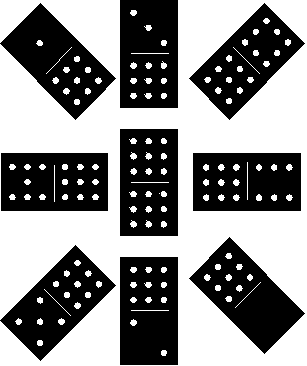
4. After the star is completed, matching tiles can be added to any star point of the layout, but only one tile is added per turn. If a player is unable or unwilling to play a tile, they must pick up one or more tiles from the Boneyard, either until they are willing or able to add a tile to the layout. If a player looks at any tile in the Boneyard, they must add that tile to their hand; they cannot choose and discard tiles. If there are no more tiles in the Boneyard, players must then miss a turn if they are unable to play a matching tile to either end of the layout.
5. Play continues until one player has placed all their tiles in the centre. That player then scores all the spots on the remaining players' tiles. If no player can put all their tiles in the layout, the game is a draw and each player scores ten points.
6. The overall winner of Cyprus is the first player to reach 200 points or more.
 Click here for printer friendly version
| Click on the links below for more Tile Games such as ... |
|
Do you have a favourite Tile game that you want to share with all our readers? You can share YOUR Tile game and/or check out other readers' favourite Tile games. It's easy! Just click on this share YOUR Tile game link and follow the instructions. |
Thank you for visiting our website!
Parlor Games | Board Games | Traveling Games | Tile (Domino) Games
Card Games | Worldwide Games | Outdoor Games | Dice Games | Word Games
Christmas Games | Easter Games | Thanksgiving Games
Family Reunion Games | Valentines Games
Great Gift Ideas
 Cashflow |
 Monopoly |
 Family Trampoline |
 Volleyball Set |
 Table Tennis Table |
Ebooks
 The Family Guide to Party Games |
 The Family Guide to Christmas Games (Volume 1) |
 The Family Guide to Christmas Games (Volume 2) |
 The Family Guide to Printable Board Games |
 The Family Guide to Printable Travel Games |

All rights and trademarks are the property of their respective owners.
All rights reserved
This site may receive compensation for some or all referred products.
The payment received from these products helps subsidise the running costs of the site.

Children are a heritage from the LORD